1. The Problem We See
In many townships we see businesses built around trailers, cold rooms, tents and equipment.
Demand exists. People need these services. The problem is not demand.
In many townships we see businesses built around trailers, cold rooms, tents and equipment.
Demand exists. People need these services. The problem is not demand.
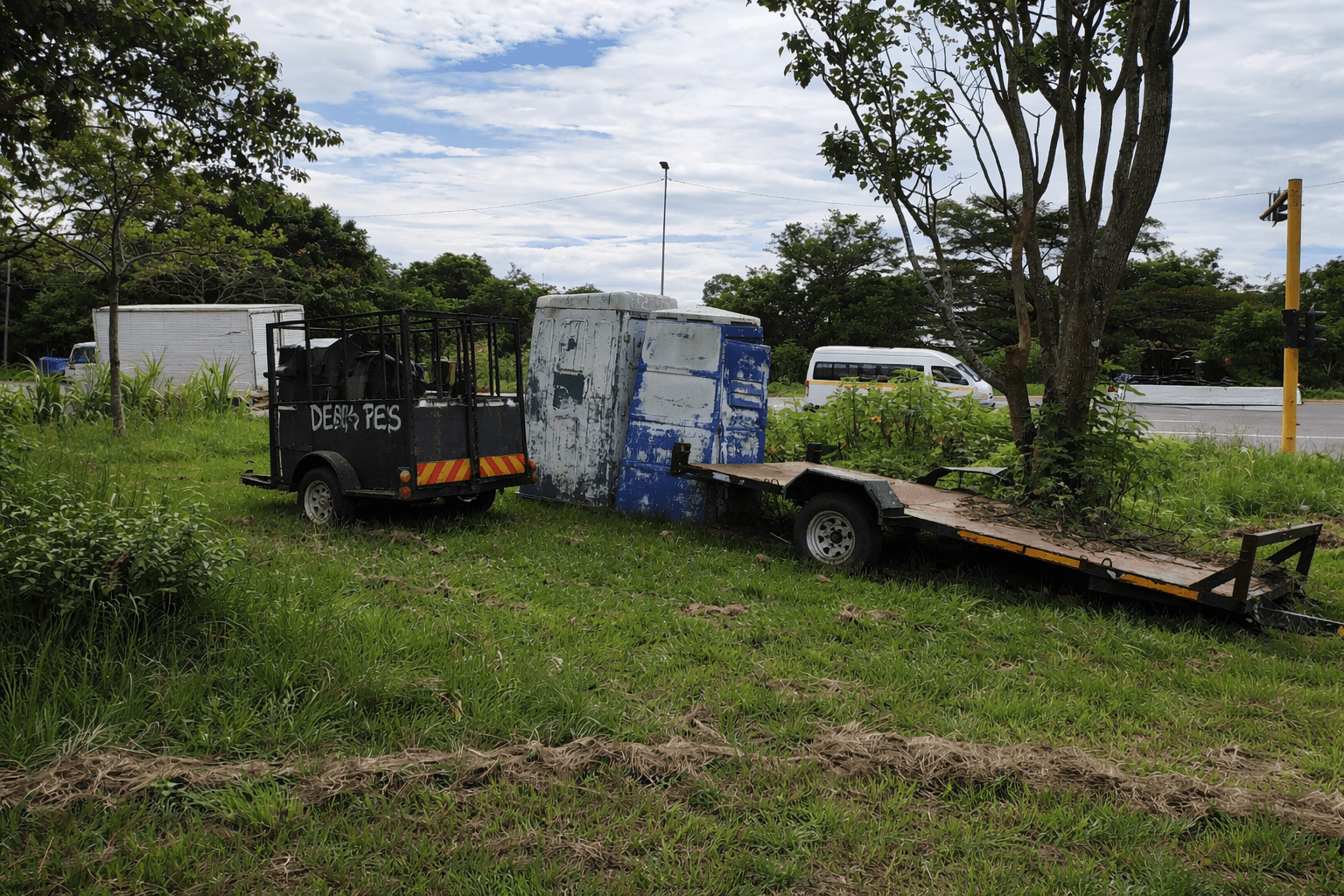
The business depends on one person. When that person stops operating, the business disappears.
There is no structure to carry it forward. No way for someone else to step in. The assets, the customers, the knowledge — they vanish.
People try to fix this. They form groups, pool money, buy equipment. But without a clear structure, things break down.
Without answers, the venture stalls or falls apart.
We are used to one person owning the business. One person takes the risk, does the work, keeps the profit.
That pattern works when one person can do everything. It fails when the business needs more capital, more skills, or a way to outlast one person.
This approach allows investors to collectively own and grow income-producing assets.
Instead of one person owning the equipment, a company owns it. Investors put in capital and receive units. The company earns rental income. Profit is shared according to how many units you hold.
When one person steps back, the structure remains. The assets, the income, the ownership — they stay in place.
Three people decide to invest in a trailer business.
Total capital = R60 000
The company is formed. The trailers are rented out.
Money comes in. The business is earning.
They each put in different amounts:
You need a clear rule. Something that everyone can see and verify. That is where units come in.
So each person receives units in proportion to what they put in at the start:
Profit is shared according to units. More units, larger share. Simple and transparent.
Now the investors decide how much of that profit they will take home, and how much they will leave in the company.
They choose to take home R84 000 as dividends and leave R60 000 inside the business.
Deposit: Ndlazitha Trailers Pty Ltd
Description: Annual dividend distribution
Amount: R21 000
Deposit: Ndlazitha Trailers Pty Ltd
Description: Annual dividend distribution
Amount: R49 000
Deposit: Ndlazitha Trailers Pty Ltd
Description: Annual dividend distribution
Amount: R14 000
That is the value left in the company after the year ends.
A year later, someone in the community sees the trailers working and wants to invest.
The key question appears: How much should she pay per unit?
This approach allows investors to collectively own and grow income-producing assets.
Change the inputs and watch the ownership model recalculate.
If this model makes sense to you, you can register your interest below.
Submitting this form does not commit you to investing. It simply allows us to share more information and invite you to future discussions.